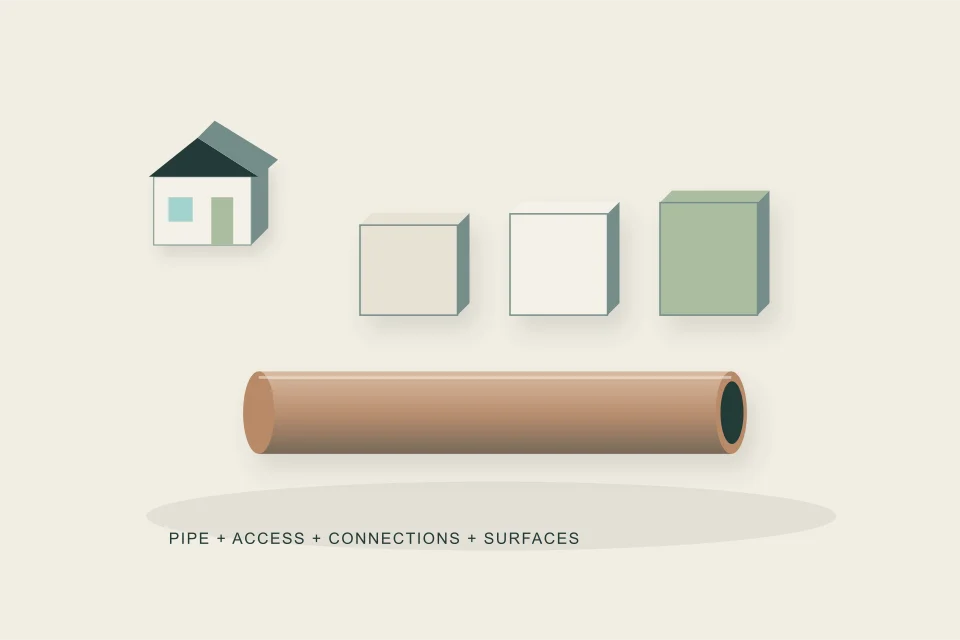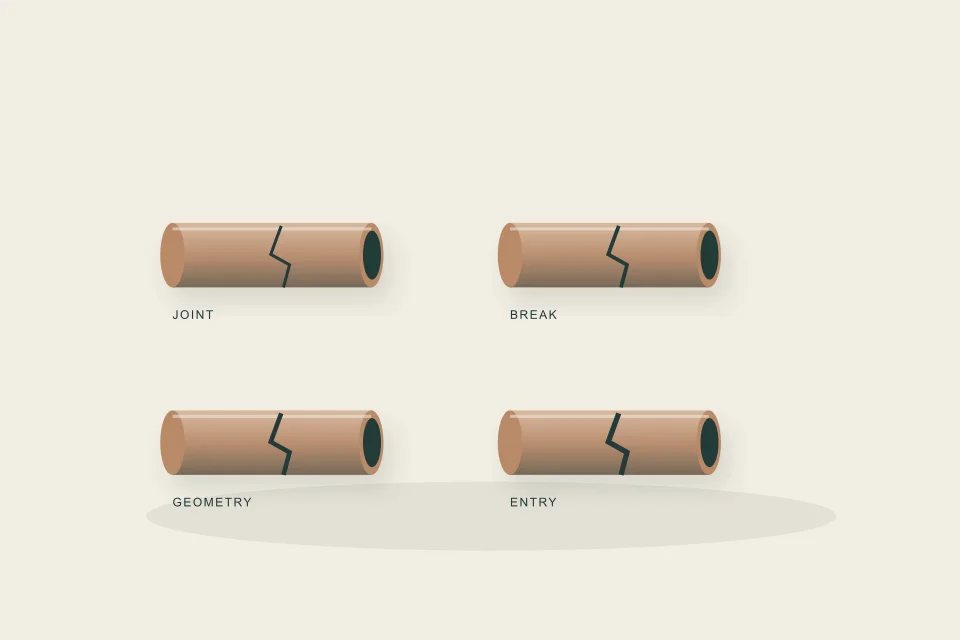
A sewer repair decision should connect a recorded condition to a defined repair objective. Ask the provider to identify the affected section, explain which methods can meet that objective and compare access, connections and restoration. Age, a backup or a high quote alone does not select the correct Calgary repair.
- Connect the proposed repair to a recorded defect and a defined objective.
- Explain why the repair starts and ends at the selected boundaries.
- Compare lining, replacement and access against the same finding.
- Document newly found conditions and approval before changing the agreed repair.
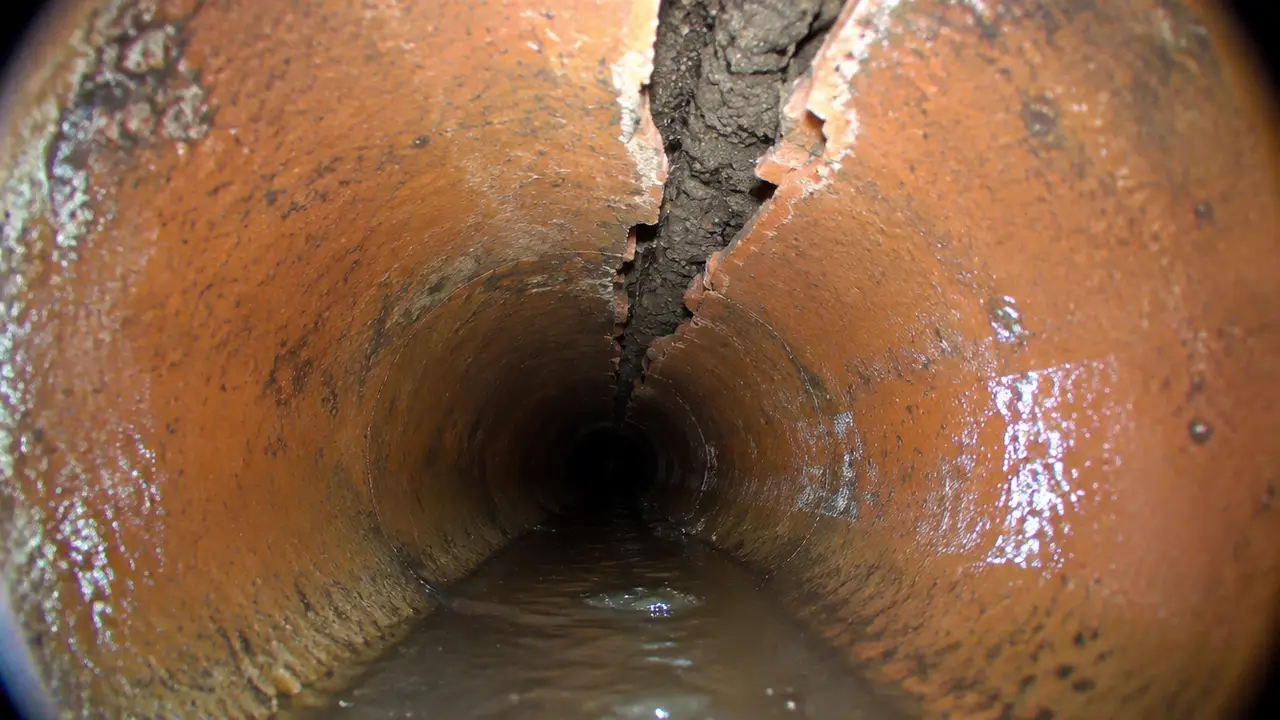
01 /What is the repair intended to change?
Begin with the actual finding and location. A displaced joint, localized break, assessed low section and root entry do not describe the same condition. Ask which observation supports the proposed work and what remains uncertain. Flow restoration after clearing may be useful but does not answer every structural question. Keep cleaning, investigation and construction as separate scope items so you can understand what each stage changes and how its result will be demonstrated.
02 /When might a localized repair be considered?
A provider may assess whether a limited problem can be addressed without replacing the whole route. That requires practical access and sufficient evidence about the surrounding pipe. Ask how the repair limits were selected and what condition outside those limits remains unresolved. A small excavation can still involve significant surface restoration or nearby utilities. Compare the full job, including access, connection details and completion records, rather than assuming a short pipe length always means a simple or inexpensive visit.
03 /How do lining and replacement differ?
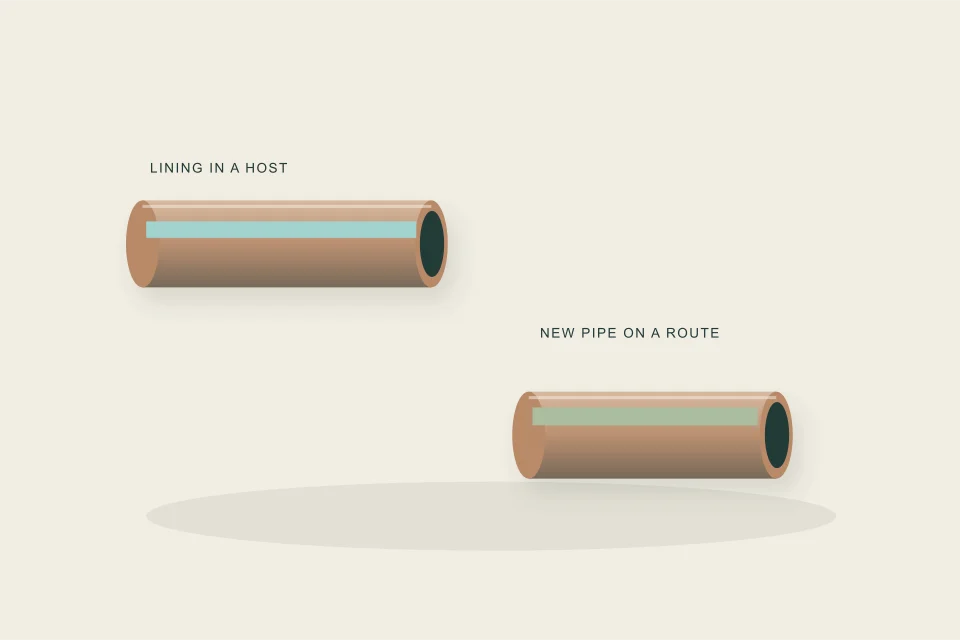
Lining creates a new interior within an assessed existing route; replacement installs new pipe over the defined extent. These are general mechanisms, not a suitability verdict. Ask how each option handles the recorded defect, geometry, branches and endpoint connections. A proposal should identify preparation and any excluded condition. A method described as trenchless can still require access excavations or localized work. The useful comparison is how each complete scope meets the repair objective at this property.
04 /Which unknowns change the decision?
Incomplete footage, uncertain route, unavailable access and unconfirmed underground conditions can limit a proposal. Ask which uncertainties are included in the price and which trigger further investigation or a change order. Give the provider existing drawings and records without claiming they are accurate surveys. A defined first stage may be preferable to committing to a method on assumed information. Agree who can authorize a changed plan if actual findings differ during work.
05 /What should completion establish?
Before approving construction, ask which records will show the work extent and result. These may include inspection records, a final video where appropriate, connection notes and restoration responsibilities. The provider should distinguish temporary surface reinstatement from the agreed final finish. Retain the contract and exclusions beside the completed work record. A line flowing on the day of completion is one observation; the documented repair scope and applicable inspections answer additional questions.
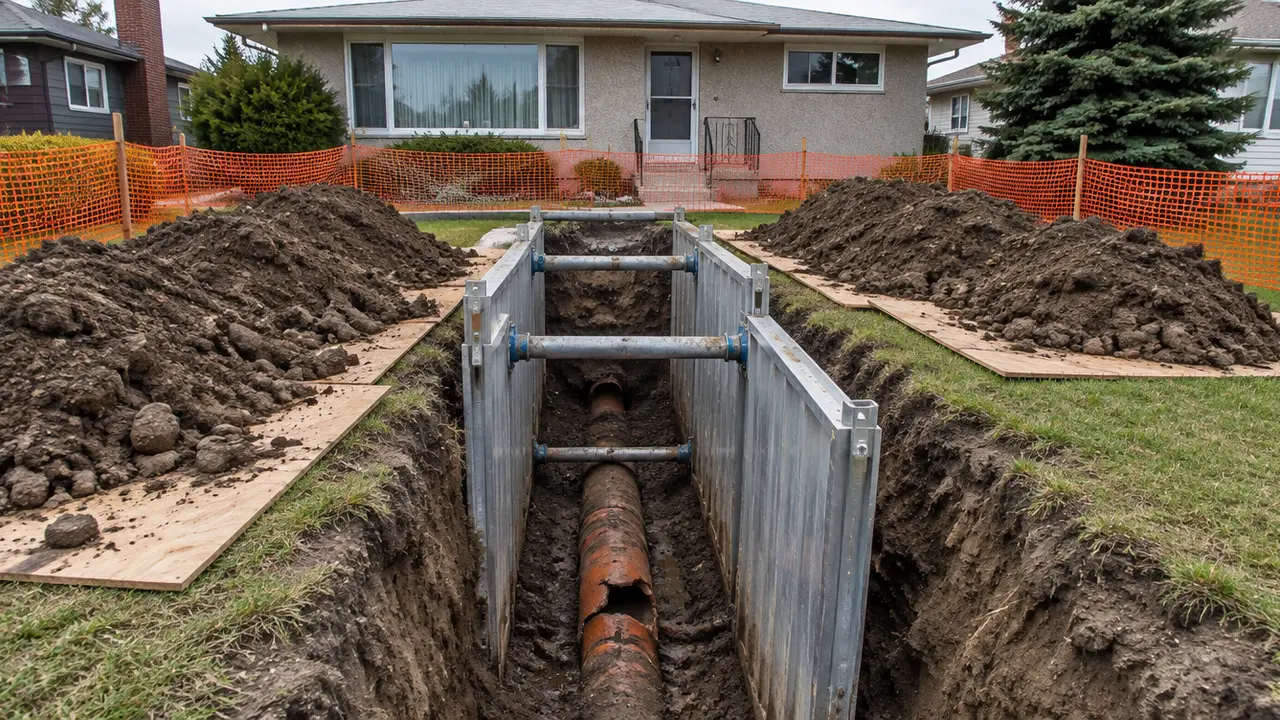
06 /How do you define the boundary of a localized repair?
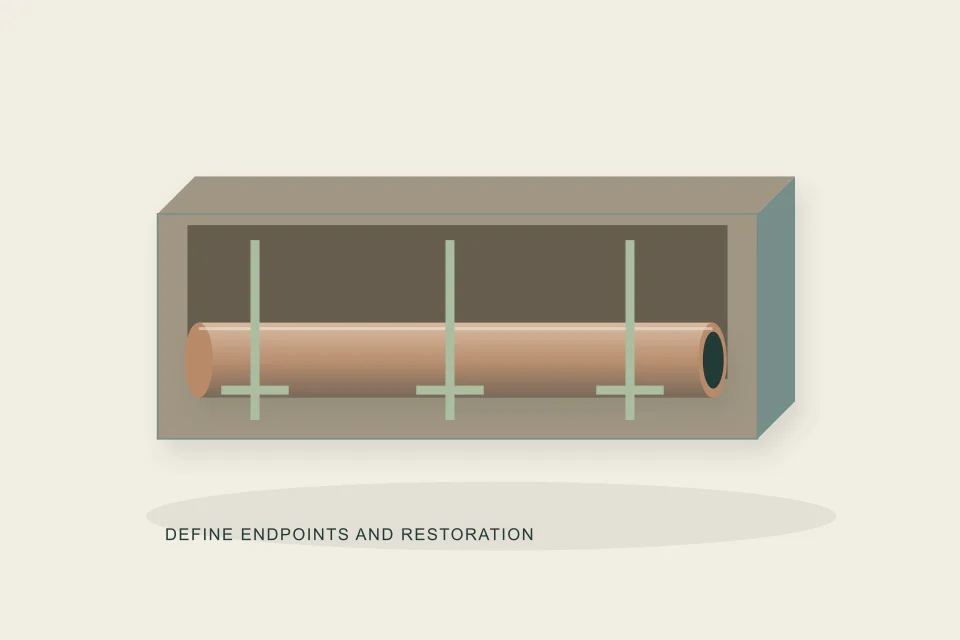
A localized repair needs a start and end reference tied to the observed defect and the surrounding condition. Ask which joint, transition or section is affected and what evidence supports stopping the intervention there. A camera still can show a finding without establishing the complete repair length. The provider should explain what additional inspection, locating or exposure is needed and how it will obtain approval if the condition extends beyond the proposed boundary.
Keep the proposed objective distinct from the method name. Reconnecting an affected section, addressing an identified entry point and correcting alignment are different tasks. Ask each proposal to state which task it addresses and what it leaves outside the scope. Where a lining option is offered, its suitability depends on the actual geometry and condition; a general trenchless label does not demonstrate that it solves the finding. Preserve the supporting records so alternatives can be compared on the same evidence.
07 /What should a repair change order explain?
A change order should connect the newly established condition to the added work. Ask for a description or record of the finding, the reason the accepted repair no longer covers it, the proposed additional extent and the effect on access, restoration and timing. A buried condition can be uncertain before exposure, but that uncertainty should be visible in the initial proposal. Agree who can approve changes and what happens while approval is pending.
For Calgary work, confirm the relevant permit and inspection responsibilities against the current municipal requirements and the provider’s project scope. Do not assume that a quote labelled “repair” settles the approval question. Keep the final completion record linked to the accepted scope and any approved changes. It should distinguish the repaired segment from adjacent pipe that was inspected, cleaned or left outside the work. That distinction is useful for later maintenance and prevents a limited repair invoice from becoming an unsupported claim about the whole sewer service.
08 /How do you turn the finding into a Calgary project request?
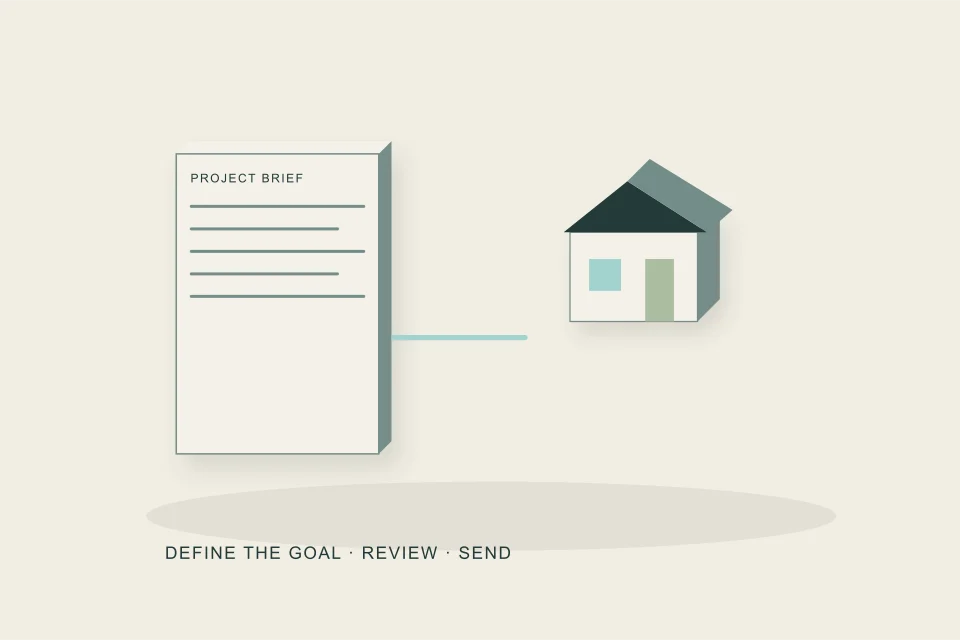
Start with the decision you need to make: inspect an unknown route, understand a recorded defect, compare repair methods or plan a new service. Include the location, property use, known access and records available. State the limits of your information. The project builder keeps those answers in this tab and carries an editable outline into the quote form. You review the brief and grant contact permission before submitting. Building the outline does not book a visit, accept a construction contract or establish a price.
Identify the person who can authorize access and the person who can approve changes. Tell the provider about occupants, preferred windows and dependencies on other work. A preliminary scope may need further investigation or a qualified design before installation can be priced. Ask which task resolves each important unknown and what will be delivered at that stage. This keeps an early planning enquiry distinct from an instruction to construct an assumed solution.
09 /Which details should accompany an itemized proposal?
Request the work extent and endpoints, evidence supporting the method, access plan and restoration responsibility. Ask how approvals and inspections will be confirmed for the actual job. Compare the same tasks across providers, including known exclusions and allowances. If route, geometry or a connection is unconfirmed, retain that uncertainty in the proposal. A universal Calgary price cannot account for those differences, and a quote for a short pipe length may omit substantial setup or surface work.
Agree how changed conditions are reported and priced before the crew encounters them. Identify who can approve further work and whether work pauses for that approval. Ask which completion records will show the extent actually repaired or installed, and what remains outside the result. Keep drawings, original footage, accepted scope, changes and handover notes together. A clear property history supports future maintenance and helps another reviewer understand the decisions without treating an old survey as a current certification.
10 /What can HAUSE help with?
HAUSE Sewer supplies general information and receives service requests; it is not a contractor and does not perform sewer work. With your consent, the team can review the request and seek an appropriate provider introduction where available. A qualified provider must assess the property and confirm method, availability and price. Ask HAUSE can help interpret general terminology or organize the next question. It cannot decide legal responsibility, approve a permit, diagnose an unseen pipe or reserve construction from a chat message.
Use the separate follow-up form when you want your project details reviewed. Check the location, contact details and outline before sending. Keep private transaction documents, tenant records and sensitive account information out of general chat. Save the submission result and any later provider scope. If an immediate hazard is present, contact appropriate emergency or local assistance instead of waiting for the request queue. A generated brief is a planning aid; successful submission and provider confirmation are later, separate steps.
FAQQuestions people ask
What should a localized sewer-repair proposal say about adjacent pipe?
It should identify the repair limits, the evidence supporting those limits and the condition known outside them. Keep inspected, cleaned and repaired sections distinct; a limited repair does not establish the condition of the whole service.
Does HAUSE repair Calgary sewer lines?
HAUSE is an information and service-request network, not a contractor. A qualified provider must assess the property and confirm any work, method, availability and price.
Can I request a residential or commercial quote?
Yes. Identify the actual property use and project goal in the builder or quote form, review the outline and give contact permission. The team reviews requests for possible provider introduction where available.
Is a sewer scope part of every home inspection?
Do not assume it is. Ask the inspector what underground camera work is included, which access is needed and what recording and written findings will be delivered.
Does an older home automatically need replacement?
No. Building age helps gather records but does not establish the current pipe condition. Repairs and altered routes can change the system. Base the next decision on actual findings and limitations.
What if the inspection stops before the endpoint?
Keep the unseen section recorded as unknown. Ask why travel stopped and which practical assessment could improve coverage. Do not assume the unviewed pipe is sound or defective.
NETWORKGo deeper across the HAUSE Sewer network
How to pay for sewer repair: deposits, payment schedules and financing
How to pay for sewer line repair or replacement in Canada: reasonable deposits, milestone payment schedules, financing options and staging the work.
SewerInspector.caCommon sewer defects, explained by what they do to the pipe
Common sewer defects explained: roots, cracks, fractures, offset and separated joints, sags, deposits, holes and collapse, with severity and usual next steps.
SewerJetting.caWhat to expect on a hydro jetting visit, from arrival to camera proof
What to expect on a hydro jetting visit: access, camera inspection, nozzle choice, jetting passes, clean-up, the proof you should get and how to prepare.