Compare Calgary sewer quotes against the same finding, work extent and completion objective. Separate assessment, cleaning, repair, access and restoration, then list exclusions and change approvals. The lowest total is not automatically the best value when bidders are proposing different tasks or relying on different unconfirmed assumptions.
- Give each bidder the same footage, records and work objective.
- Separate investigation, cleaning, construction and restoration line items.
- Identify allowances, exclusions and unresolved assumptions beside the total.
- Agree who approves changed conditions and which completion records are included.
01 /What information should every bidder receive?
Share the same symptoms, property access notes and authorized inspection record. Identify the decision you need to make and any unknown route or coverage. Avoid sending one bidder complete footage and another only a short description, then comparing their totals as if they share the same evidence. A simple scope sheet can list the target section, proposed objective and deliverables. Keep personal transaction, tenant or insurance information out of an initial request unless it is required for an authorized follow-up.
02 /Which scope items should be separated?
Ask for investigation, cleaning, locating, construction, connection work and restoration as identifiable items. Include permits and inspections where applicable without assuming a standard fee or process. The bidder should explain whether disposal, access changes, return visits and temporary arrangements are included. A price per metre does not describe setup, endpoint complexity or surfaces. Review the complete project sequence alongside the number so a short headline cannot hide the tasks that make the proposal materially different.
03 /How do allowances and exclusions affect comparison?
An allowance can be reasonable when a task cannot yet be confirmed, but it should identify its basis and approval process. Ask what triggers added work, how the new price is set and whether work stops for authorization. Exclusions should state who is expected to supply the missing task. If a proposal assumes a clean, accessible route while another includes preparation, compare both after adjusting the scope. Retain uncertainty rather than forcing a false all-in total before information exists.
04 /What evidence should support the method?
Request the recorded condition and the reasoning that links it to cleaning, localized repair, lining or replacement. Ask what the proposed method leaves unresolved and which alternatives were assessed. A generic statement about age or trenchless benefits cannot select a property-specific remedy. If proposals differ substantially, a defined second review of the footage and site information may help. Give that reviewer the original scope and limits so the comparison is based on evidence, not a preference for one marketing description.
05 /What should be agreed before acceptance?
Confirm the actual scope, price basis, availability, authorization process and completion records with the provider. Review contractual terms with appropriate advice where needed. Ask who handles occupant instructions, inspection coordination and final restoration. A HAUSE request starts a review; it does not accept a contract or reserve a crew. Keep the accepted proposal and later changes together. This allows the final invoice and handover to be checked against the decisions actually approved, rather than against an informal conversation.
06 /How do you normalize bids that propose different methods?
Create a comparison row for the repair objective before listing the method each bidder proposes. State the observed finding, the intended affected segment and the outcome wanted. Then ask each bidder how its method addresses that objective and which assumptions require confirmation. A localized repair, lining proposal and replacement offer may differ in extent as well as technique. Their totals are not directly comparable until the included segment, connections, access and restoration have been made explicit.
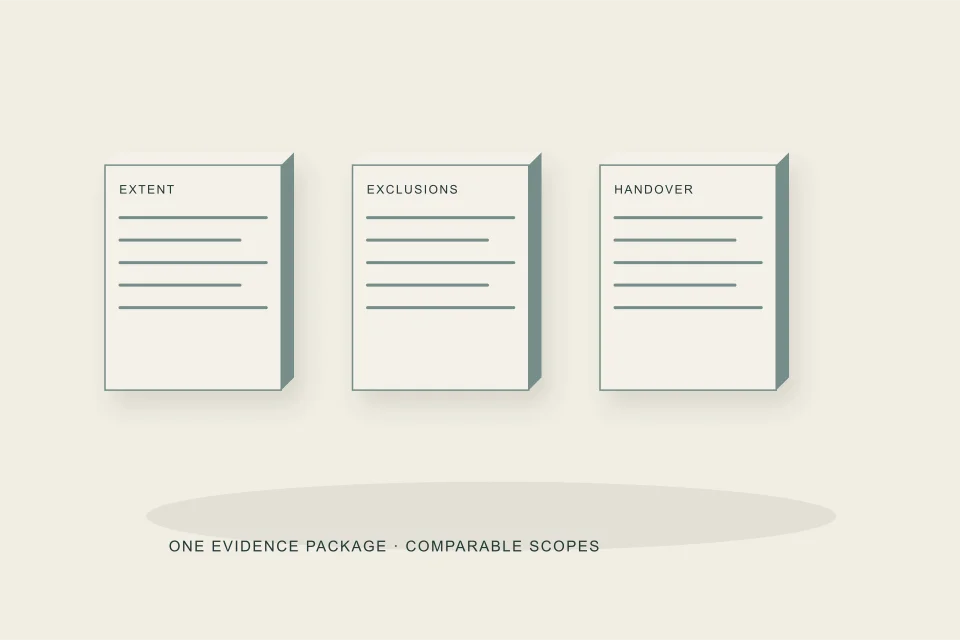
Keep optional investigation separate from committed construction. One bidder may require locating or another camera run before fixing a price, while another may include an allowance for the same uncertainty. Ask what evidence would resolve the uncertainty and what happens to the proposal afterward. Do not label a conditional estimate a fixed quote. Put the original finding and all known access limits in the common evidence package so each bidder responds to the same project rather than filling gaps with different assumptions.
07 /Which unanswered items should stop a price-only decision?
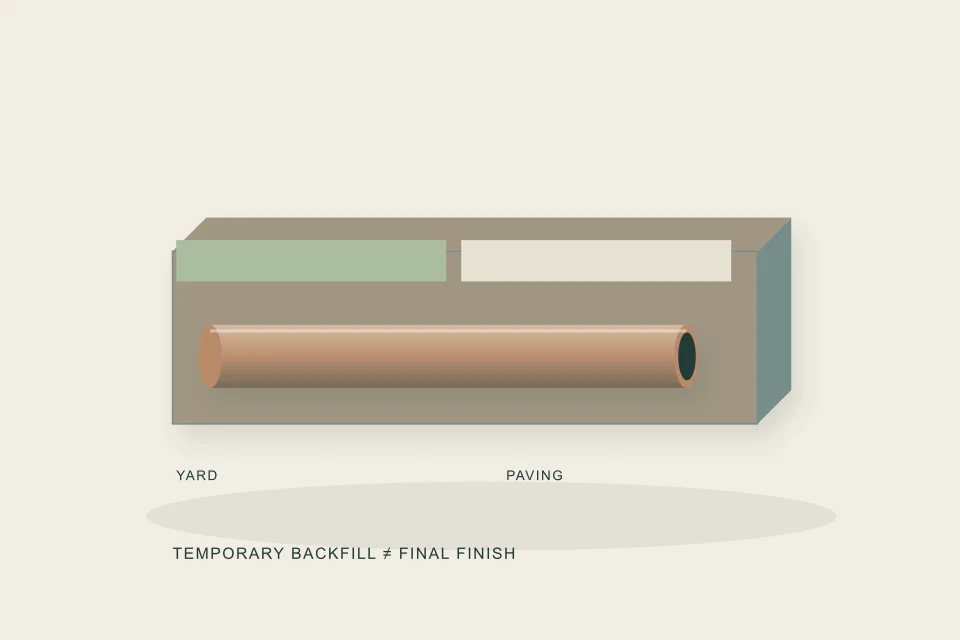
Pause when the work boundary, change-approval process or finished surface is unspecified. Those gaps can matter more than a difference in the headline total because they affect what the owner must arrange or pay for later. Ask whether camera records, inspections, disposal, connection work and access creation are included or excluded. “Restoration included” should name the surface and finish, and an allowance should explain the condition it covers rather than conceal it inside a single project total.
Write down the answer from each bidder and retain it with the accepted scope. If a proposal cannot establish the buried condition yet, ask for a bounded assessment with a clear deliverable. That can be more actionable than choosing the most confident description. HAUSE can help organize the request and the comparison questions; the selected provider must assess the site and issue its own scope and terms. Your editable project request should preserve the uncertainty so it reaches the follow-up conversation.
08 /How do you turn the finding into a Calgary project request?
Start with the decision you need to make: inspect an unknown route, understand a recorded defect, compare repair methods or plan a new service. Include the location, property use, known access and records available. State the limits of your information. The project builder keeps those answers in this tab and carries an editable outline into the quote form. You review the brief and grant contact permission before submitting. Building the outline does not book a visit, accept a construction contract or establish a price.
Identify the person who can authorize access and the person who can approve changes. Tell the provider about occupants, preferred windows and dependencies on other work. A preliminary scope may need further investigation or a qualified design before installation can be priced. Ask which task resolves each important unknown and what will be delivered at that stage. This keeps an early planning enquiry distinct from an instruction to construct an assumed solution.
09 /Which details should accompany an itemized proposal?
Request the work extent and endpoints, evidence supporting the method, access plan and restoration responsibility. Ask how approvals and inspections will be confirmed for the actual job. Compare the same tasks across providers, including known exclusions and allowances. If route, geometry or a connection is unconfirmed, retain that uncertainty in the proposal. A universal Calgary price cannot account for those differences, and a quote for a short pipe length may omit substantial setup or surface work.
Agree how changed conditions are reported and priced before the crew encounters them. Identify who can approve further work and whether work pauses for that approval. Ask which completion records will show the extent actually repaired or installed, and what remains outside the result. Keep drawings, original footage, accepted scope, changes and handover notes together. A clear property history supports future maintenance and helps another reviewer understand the decisions without treating an old survey as a current certification.
10 /What can HAUSE help with?
HAUSE Sewer supplies general information and receives service requests; it is not a contractor and does not perform sewer work. With your consent, the team can review the request and seek an appropriate provider introduction where available. A qualified provider must assess the property and confirm method, availability and price. Ask HAUSE can help interpret general terminology or organize the next question. It cannot decide legal responsibility, approve a permit, diagnose an unseen pipe or reserve construction from a chat message.
Use the separate follow-up form when you want your project details reviewed. Check the location, contact details and outline before sending. Keep private transaction documents, tenant records and sensitive account information out of general chat. Save the submission result and any later provider scope. If an immediate hazard is present, contact appropriate emergency or local assistance instead of waiting for the request queue. A generated brief is a planning aid; successful submission and provider confirmation are later, separate steps.
FAQQuestions people ask
How do I compare a lining quote with an excavation quote?
Ask both bidders to address the same finding and extent. Compare the complete preparation, connections, access, restoration, exclusions and completion evidence for each approach, with any unconfirmed suitability conditions clearly stated.
Does HAUSE repair Calgary sewer lines?
HAUSE is an information and service-request network, not a contractor. A qualified provider must assess the property and confirm any work, method, availability and price.
Can I request a residential or commercial quote?
Yes. Identify the actual property use and project goal in the builder or quote form, review the outline and give contact permission. The team reviews requests for possible provider introduction where available.
Is a sewer scope part of every home inspection?
Do not assume it is. Ask the inspector what underground camera work is included, which access is needed and what recording and written findings will be delivered.
Does an older home automatically need replacement?
No. Building age helps gather records but does not establish the current pipe condition. Repairs and altered routes can change the system. Base the next decision on actual findings and limitations.
What if the inspection stops before the endpoint?
Keep the unseen section recorded as unknown. Ask why travel stopped and which practical assessment could improve coverage. Do not assume the unviewed pipe is sound or defective.
NETWORKGo deeper across the HAUSE Sewer network
How to compare sewer quotes line by line
How to compare sewer quotes: a line-by-line worksheet to normalise scope, spot missing items, convert to per-metre cost and choose between three contractor quotes.
PipeCleaning.caPipe cleaning cost in Canada, method by method
Pipe cleaning cost in Canada for 2026: planning ranges for snaking, hydro jetting, descaling, camera inspection and stacks, and what moves a quote.
SewerInspector.caSewer inspection vs home inspection: where one stops and the other starts
Sewer inspection vs home inspection: what a home inspector checks in the plumbing, what only a sewer camera sees, who does each, and how to book both.