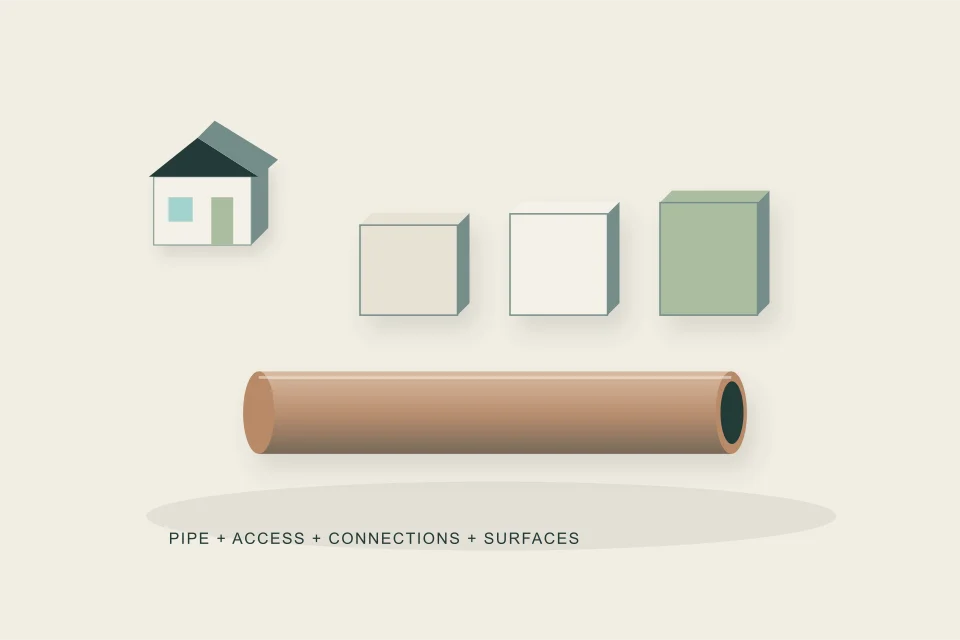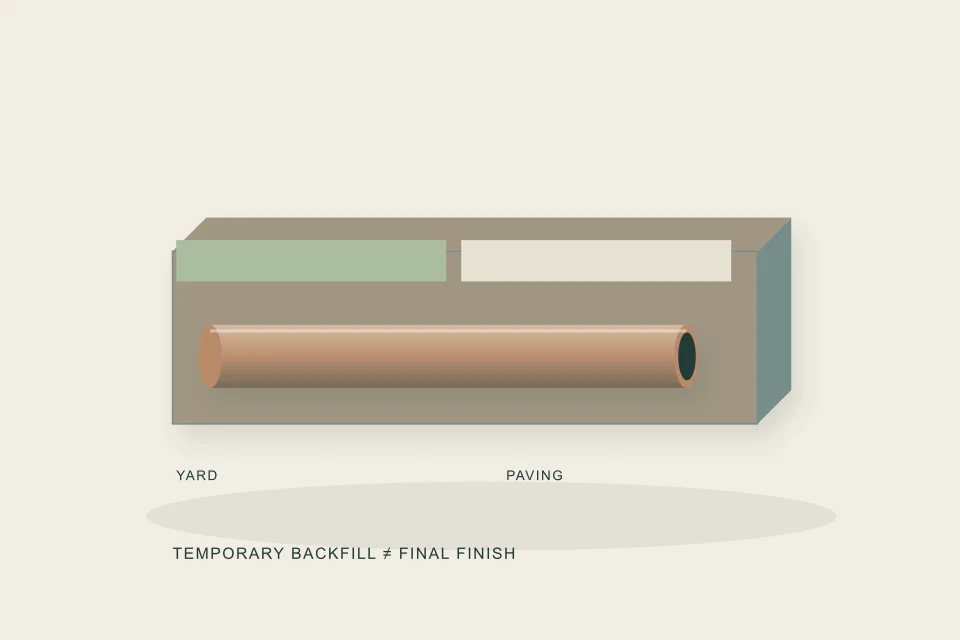
Access and restoration can change the practical scope of a Calgary sewer project. Record visible surfaces, occupied routes and known constraints, then ask the provider to identify equipment access, excavations and final reinstatement. A trenchless label or short pipe length does not define the whole surface-work commitment.
- Record visible surfaces and occupied access routes before work starts.
- Ask for actual equipment routes and excavations, including trenchless access pits.
- Specify temporary reinstatement and the agreed final surface finish separately.
- Identify responsibility, timing and acceptance of the restoration work.
01 /What can a homeowner document safely?
Take photos of the yard, driveway, gate, fence and visible access area from ordinary safe positions. Tell the provider about narrow routes, overhead constraints, retained landscaping and occupied entrances. Do not dig test holes or enter a trench to improve a quote. Mark your sketch as illustrative, not a survey or utility locate. The provider needs to assess actual access and underground conditions, while your visible-site record can make the first planning discussion more specific.
02 /How should access excavations be shown?
Request a plan identifying the intended entry, receiving or localized repair areas and equipment staging. Ask which parts are confirmed and which are assumptions. Include movement around garages, pedestrian routes and business entrances. A method may reduce excavation along the full line while still requiring substantial work at endpoints. Compare that actual plan to the open-cut alternative. Do not infer the excavation footprint from an online model or from the length of pipe alone.
03 /Which surfaces need a written finish standard?
Identify lawn, planting, paving, concrete, steps and retaining features separately. Ask whether each is protected, removed, reinstated or excluded. Temporary backfill and a final surface finish are different commitments. Define the area of work and the responsible party for deferred tasks. Seasonal conditions can affect timing, but the contract should explain how unfinished work is recorded and handed over rather than leave an assumed promise that everything will somehow return to its original appearance.
04 /How are neighbouring and public spaces handled?
Tell the project team about shared access, easements and known boundary questions. It must assess the relevant permissions and any public-property requirements before work. A neighbour’s informal comment does not replace a required approval, and a visible fence is not necessarily the legal line. Keep authorised agreements with the scope. Ask how access restrictions will be communicated and who resolves an unexpected constraint so a construction crew is not asked to make a legal or project-design decision on the spot.
05 /What should the handover document?
Retain the completed work extent, inspection or video records where applicable, and the surface tasks finished or still outstanding. Photograph visible results from a safe location. Compare them to the agreed scope rather than a generic before-and-after advertisement. Ask who receives questions about settlement or deferred reinstatement and what written terms apply. Keep the restoration record alongside the sewer repair record so future work can distinguish original features from construction changes.
06 /What should a pre-work surface record show?
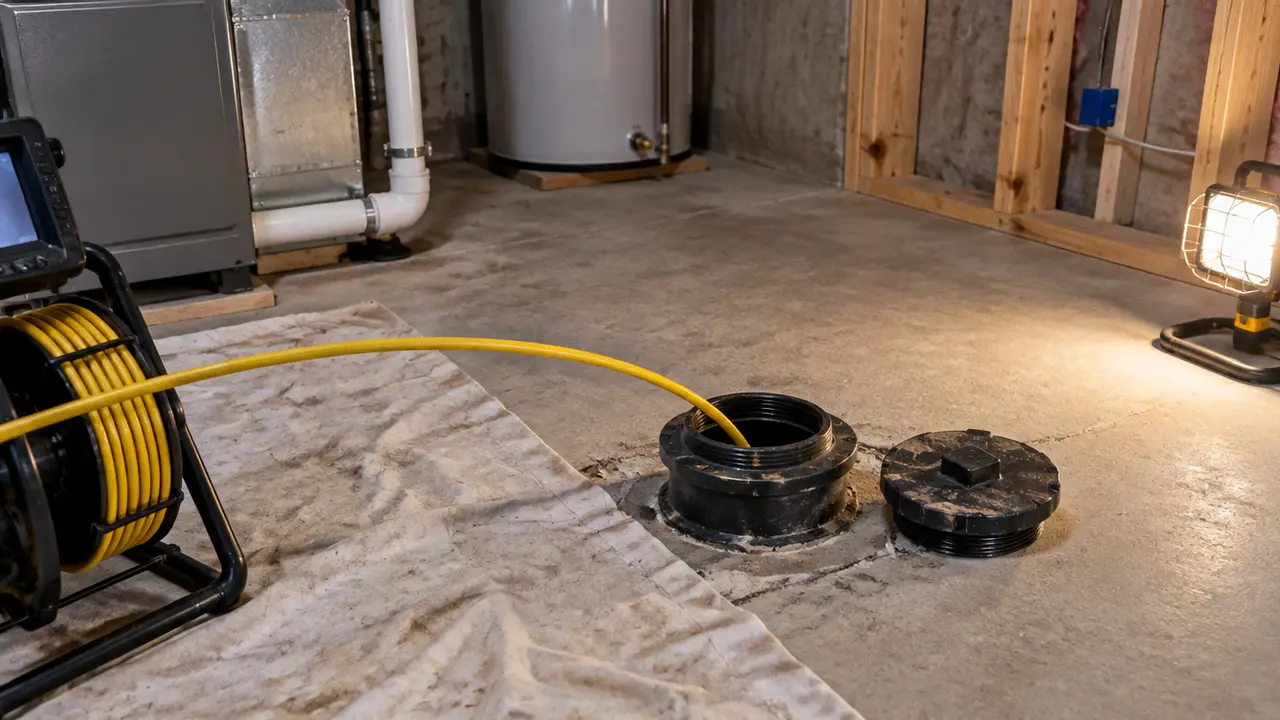
Record the condition of the specific surfaces within the proposed access area from safe, permitted positions. Identify concrete joints, paving patterns, landscape edging, steps and other features that affect the finish discussion. Date the record and agree which photos relate to the accepted scope. The purpose is to define the work area and expected finish, not to produce an informal survey or to infer buried utility locations. Ask the provider which additional site measurements or assessments it needs.
Name access constraints separately from restoration items. A narrow gate, occupied suite, neighbouring property or public sidewalk may affect how the work can proceed. Do not assume permission to cross another property or occupy public space because an old service route appears to run there. The proposal should identify the access and approval responsibilities it is relying on. Where the arrangement is unresolved, keep it as a condition to settle before equipment arrives.
07 /How do you define temporary and final reinstatement?
Temporary reinstatement and the agreed final finish should have separate descriptions. Ask what the work area will look like when the pipe operation ends, which surfaces remain unfinished and who is responsible for the later stage. Soil replacement alone does not describe lawn establishment, paving replacement or a concrete finish. If weather or another construction stage affects completion, record the proposed timing and handover conditions without assuming a fixed seasonal result.
Tie the final acceptance discussion to the named surfaces in the quote. Request a record of the finished work and any remaining tasks, along with the pipe and inspection documents that belong to the installation. If an owner is arranging part of the restoration independently, make that boundary visible to both contractors. A trenchless method may reduce continuous excavation while still requiring access pits and surface work. The restoration question should follow the actual proposed access rather than the marketing label of the sewer method.
08 /How do you turn the finding into a Calgary project request?
Start with the decision you need to make: inspect an unknown route, understand a recorded defect, compare repair methods or plan a new service. Include the location, property use, known access and records available. State the limits of your information. The project builder keeps those answers in this tab and carries an editable outline into the quote form. You review the brief and grant contact permission before submitting. Building the outline does not book a visit, accept a construction contract or establish a price.
Identify the person who can authorize access and the person who can approve changes. Tell the provider about occupants, preferred windows and dependencies on other work. A preliminary scope may need further investigation or a qualified design before installation can be priced. Ask which task resolves each important unknown and what will be delivered at that stage. This keeps an early planning enquiry distinct from an instruction to construct an assumed solution.
09 /Which details should accompany an itemized proposal?
Request the work extent and endpoints, evidence supporting the method, access plan and restoration responsibility. Ask how approvals and inspections will be confirmed for the actual job. Compare the same tasks across providers, including known exclusions and allowances. If route, geometry or a connection is unconfirmed, retain that uncertainty in the proposal. A universal Calgary price cannot account for those differences, and a quote for a short pipe length may omit substantial setup or surface work.
Agree how changed conditions are reported and priced before the crew encounters them. Identify who can approve further work and whether work pauses for that approval. Ask which completion records will show the extent actually repaired or installed, and what remains outside the result. Keep drawings, original footage, accepted scope, changes and handover notes together. A clear property history supports future maintenance and helps another reviewer understand the decisions without treating an old survey as a current certification.
10 /What can HAUSE help with?
HAUSE Sewer supplies general information and receives service requests; it is not a contractor and does not perform sewer work. With your consent, the team can review the request and seek an appropriate provider introduction where available. A qualified provider must assess the property and confirm method, availability and price. Ask HAUSE can help interpret general terminology or organize the next question. It cannot decide legal responsibility, approve a permit, diagnose an unseen pipe or reserve construction from a chat message.
Use the separate follow-up form when you want your project details reviewed. Check the location, contact details and outline before sending. Keep private transaction documents, tenant records and sensitive account information out of general chat. Save the submission result and any later provider scope. If an immediate hazard is present, contact appropriate emergency or local assistance instead of waiting for the request queue. A generated brief is a planning aid; successful submission and provider confirmation are later, separate steps.
FAQQuestions people ask
How should a sewer quote distinguish temporary and final restoration?
Name the surfaces affected, temporary treatment, final finish, responsible party and timing. Agree how completion will be accepted and which exclusions remain. A restored trench does not necessarily mean every landscaping or paving finish is included.
Does HAUSE repair Calgary sewer lines?
HAUSE is an information and service-request network, not a contractor. A qualified provider must assess the property and confirm any work, method, availability and price.
Can I request a residential or commercial quote?
Yes. Identify the actual property use and project goal in the builder or quote form, review the outline and give contact permission. The team reviews requests for possible provider introduction where available.
Is a sewer scope part of every home inspection?
Do not assume it is. Ask the inspector what underground camera work is included, which access is needed and what recording and written findings will be delivered.
Does an older home automatically need replacement?
No. Building age helps gather records but does not establish the current pipe condition. Repairs and altered routes can change the system. Base the next decision on actual findings and limitations.
What if the inspection stops before the endpoint?
Keep the unseen section recorded as unknown. Ask why travel stopped and which practical assessment could improve coverage. Do not assume the unviewed pipe is sound or defective.
NETWORKGo deeper across the HAUSE Sewer network
Sewer line replacement cost: open-cut vs trenchless, line by line
Sewer line replacement cost in Canada for 2026: open-cut, CIPP lining and pipe bursting planning ranges in CAD, per-metre math, line items and what moves price.
SewerRoots.caSewer root removal cost in Canada: cutting, chemicals and permanent fixes
Sewer root removal cost in Canada for 2026: planning ranges for cable cutting, jetting, camera, lining, bursting and replacement, plus cycle-versus-fix math.
SewerInspector.caCondo and multi-unit sewer inspections: who scopes what
Condo and multi-unit sewer inspections: shared vs unit piping, what boards should scope, what buyers should ask for, and access in occupied buildings.